

Financial equality starts with financial knowledge
Money Ready’s Cost of Not Knowing flagship campaign and research, launched in January 2026, reveals a critical pattern: there’s a significant gap in money confidence levels that suggests women may be experiencing imposter syndrome around money.
While overall confidence levels are nearly identical (men 84% vs women 82% net confident), there’s a significant gap in “very confident” responses, with only 32% of women feeling ‘very confident’ managing money compared to 44% of men.
The research also shows that women are 25-40% less likely than men to feel they “know everything they need” across financial products from taxes to pensions and investments.
“Women aren’t less capable with money,” says Helen Foster, 16+ Programme and Delivery Director at Money Ready. “However, our research suggests that women are often less equipped. It revealed a systematic knowledge gap across every major financial decision, from mortgages to pensions.”
Unsurprisingly, this discrepancy has an emotional and behavioural impact, with women experiencing greater financial stress about money.
Financial knowledge statistics
Compared to men, women are:
- 33% more likely to lose sleep over their finances (24% vs 18%)
- 17% more anxious about money (42% vs 36%)
- 15% more likely to leave money in low or no interest savings accounts (30% vs 26%)
- 18% more likely to miss a bill or repayment (20% vs 17%)
This ‘knowledge tax’ has real costs: women are more likely to miss out on valuable opportunities and avoid critical financial decisions.
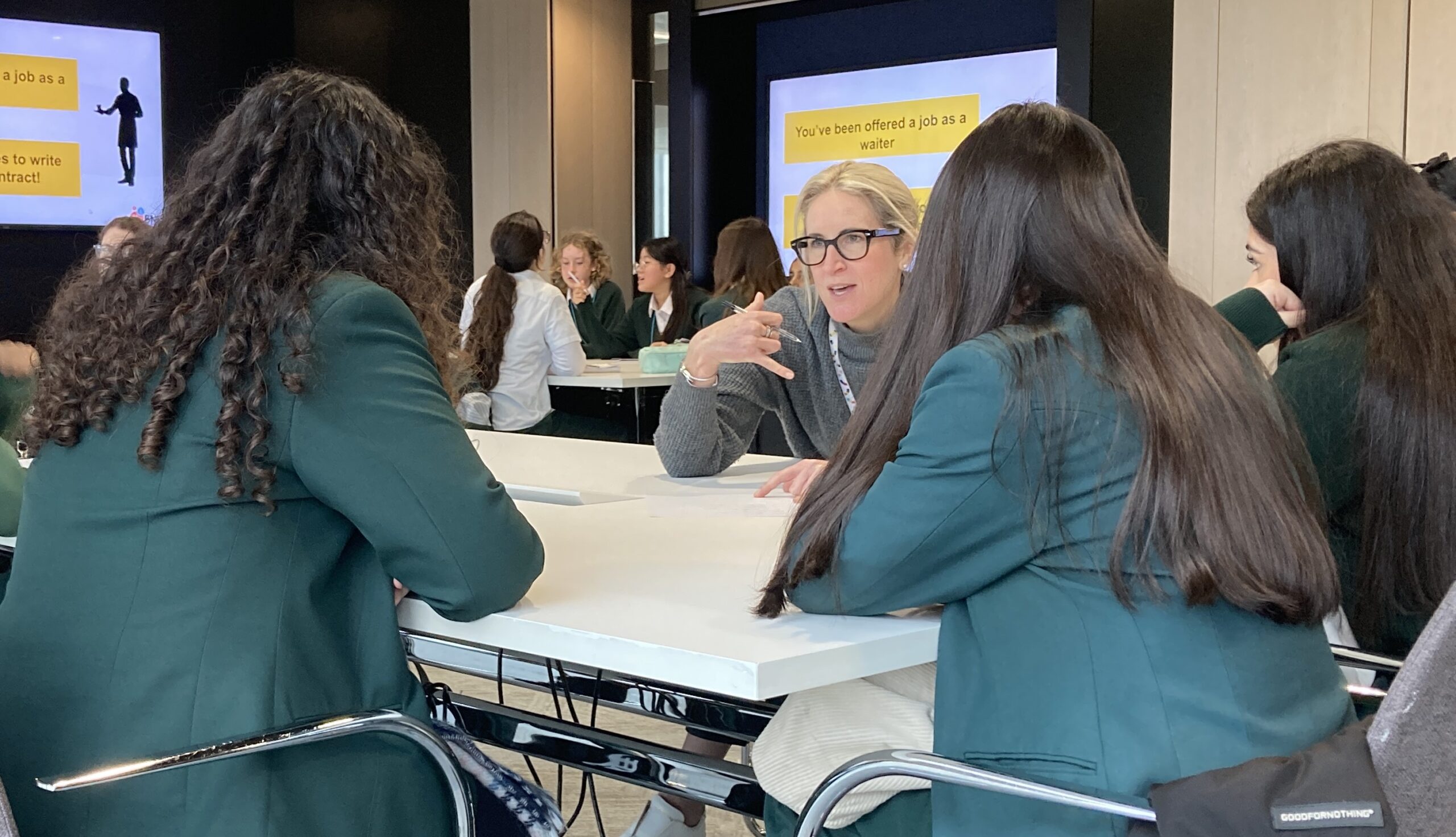
Money Ready’s actions to close the knowledge gap
“The solution isn’t telling women to be more confident,” says Helen Foster. “It’s about making financial knowledge more accessible, earlier, and in ways that work for everyone.”
Our data shows women favour credible, accessible voices, but are less likely than men to use financial advisers (26% vs 32%) – possibly due to cost, time constraints and confidence barriers.
“Money Ready is closing the knowledge gap by meeting people where they are, with clear, expert-backed guidance that cuts through the overwhelm,” says Helen. “As well as our in-person sessions, we offer a free online hub of digital resources anyone can browse at the times that suit them.”
A gift to your future self
You may have heard the phrase that your future self will thank you for saving money today. This is even more the case when it comes to pensions.
Money Ready’s research shows a significant “preparation gap” across life stages, with 19% fewer women saying they feel prepared to plan for retirement (46% women vs 57% men) and 24% fewer saying they feel prepared to choose a pension (44% of women vs 58% of men). Buying a home also presents a worrying knowledge gap, with 16% fewer women feeling they understand enough to take out a mortgage (47% women vs 56% men).
“Every woman deserves to feel prepared for the financial decisions that shape her future,” says Helen. “Happily, Money Ready can help provide the roadmap, including our guide ‘Five steps to feel pension-ready’, which lays out everything you need to know to get that pension sorted now.”
Making money make sense
-
27%
of women
find financial information overwhelming.
-
33%
of women
are more likely to lose sleep over their finances, compared to men.
It all underlines the need to make sure people start receiving impactful financial education as early as possible, and throughout key life stages in adulthood.
Despite financial education having been part of the secondary curriculum in England since 2014, provision remains patchy, and many young people still leave school without an essential grasp of budgeting, saving, credit or payslips.
This is also true of Northern Ireland, Scotland and Wales, with a Curriculum framework update expected summer 2026 in Scotland and a Curriculum taskforce active since August 2025 in Northern Ireland. With England’s Curriculum and Assessment Review also making strides to improve financial education in schools, the challenge now is integration and execution, making money literacy a real, lived experience in every classroom and beyond.
“That’s why Money Ready also has put together clear guides to translate the jargon so that it makes sense,” says Helen. “Money Ready’s free online Learning Hub breaks down complex decisions into clear, actionable steps – because we all deserve to understand our money.” Check out these articles to find out more:

Take the Money Ready MOT
Try the Money Ready MOT to discover some of the changes you could take to tackle financial overwhelm.