

Get smart with your energy bills
One of the major contributors to your individual environmental impact is your consumption of gas and electricity. Helpfully, this is one of the most impactful household bills you can cut down on to improve your finances. 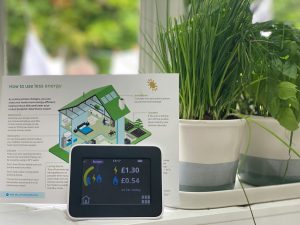
The first (and one of the easiest) ways to cut your energy usage is to use a smart meter and monitor your energy usage. However, this isn’t a saving automatically. A smart meter only saves you money if you act on what it tells you – but it’s a powerful first step. In fact, the government estimates that people will save 3% on their dual fuel bills thanks to using a smart meter.
Smart meters are likely to make you more alert to your energy usage and may lead to you noticing patterns in your consumption. In fact, Money Ready’s Cost of Not Knowing research shows that 40% of young people aged 18-24 don’t know where their money goes weekly (the highest of any group surveyed), so this is a great place to start paying attention to the small costs you’re spending each day and week – particularly if you’re a young adult transitioning to independent living.
Cutting the cost of public transport
It doesn’t take an ecologist to tell you that using public transport is more sustainable than driving, but public transport in the UK (especially trains) is not always the cheapest option, but there are some ways to cut the costs.
Firstly, railcards. This may be slightly obvious to a seasoned train traveller, but with a railcard, train fares are a third cheaper, and various groups are eligible to purchase a railcard.16-25 and 26-30 year olds can purchase one, or you can get the Two Together railcard if you often travel with a friend or partner. There’s also the Family and Friends railcard (two adults and up to four children travelling together) plus many more. 16-17 year olds benefit even further by getting 50% off train tickets.
Railcards cost around £35 to buy (depending on the type) and are valid for a year but occasionally there are discounts offered by different train ticket apps. You can buy a physical railcard in-person at train stations, but most people use digital railcards, stored in the app in which you buy tickets (or National Rail’s dedicated Railcard app).
For students, Santander’s student bank account currently offers a free 4-year railcard (worth £115!) getting you a third off train travel across the UK. Note that offers like this are always changing so make sure you check the terms.
 Another way to save on train travel is split-ticketing. This is where you buy tickets for different sections of your journey because, due to the oddities of train pricing, this can be cheaper even though you do not leave the train. For example, I recently split a trip to London with a ticket from Oxford to High Wycombe, and a ticket from High Wycombe to London.
This is a classic example of the cost of not knowing — thousands of people overpay for train tickets every day simply because they don’t know this option exists.
Thankfully, there are apps which do split-ticketing for you to calculate the cheapest price. Trainpal, Split My Fare, and TrainTickets.com all work out cheaper splits for you. There may be a small fee taken off the savings for doing so, but it’s definitely worth checking, and is easier than comparing the different split-ticket possibilities yourself
Second hand doesn’t mean second rate
A great way to be more sustainable is to purchase second hand, and these goods are often cheaper than buying new. There are often savings to be made shopping on Vinted, eBay, and depop.
The Cost of Not Knowing campaign revealed that 39% of 18-24 year olds worried they overpaid for something big because they didn’t know how to research their options, so it’s definitely worth taking the time to use price comparison sites and considering second hand as part of your research.
Refurbished technology is also a great way to get top tech for less and prevent e-waste. When buying refurbished, compare prices between retailers (Backmarket, Amazon and CeX are good to check) as some use the same refurbishers so you are getting the same technology.
Also, it’s worth checking the quality standard for the item you are purchasing. They typically range from Fair to Excellent but each retailer has their own definition of those terms. It’s also important to check the return policy for each retailer and each product as it may differ from purchasing brand new goods. Finally, it’s worth knowing that your statutory consumer rights still apply when buying second hand from a retailer.
How to bank sustainably
This one is not necessarily going to save you money, but to fully ‘go green’ you may want to consider what your bank invests in and how it operates.
Ethical banks are defined as banks which follow goals to improve the environment and society. Triodos is the gold standard of sustainable banking but charges a £3 per month fee, and Nationwide is also considered an ethical bank and there are often monetary incentives to switch there.
You can use a free tool like Bank.Green to check a bank’s ethical rating and conduct your research if you’re considering switching banks.
Lastly, your pension is probably the biggest investment you will hold in your lifetime. It may be worth considering how that is invested and whether it could be invested in more ethical investments (but of course consider the risk, projected returns and consult a financial adviser).
Final quick tips
Apps such as Too Good To Go and Olio provide discounted or free food from cafes and restaurants which would otherwise go to waste at the end of the day. As these are often surprise bags of what is left you get little choice about what you receive, but it’s a good way to get cheap food.
Buying refills of products (such as perfumes and soap) is often cheaper than buying the product again when you run out and cuts down on packaging and plastic waste. Download the Refill app to find places to shop, eat and drink at with less waste.
You can return 5 empty Lush containers for a free face mask or claim 50p per container towards your next purchase. Return a perfume bottle to The Perfume Shop for 15% off your next purchase. You can get £5 worth of points on your Advantage Card at Boots when you recycle 5 qualifying items and spend a minimum of £10 in store.