

-
Know what’s coming in and what’s about to go out
Your income might look different once a baby arrives, especially if you or a partner plan to take extended time off work. Before that happens, take a proper look at your household budget. What are your essential costs today? And what new ones, like nappies, formula, and childcare are on the horizon? Getting clear on the numbers early gives you more options to plan ahead of time.
If you have friends or family with young children, talking to them about typical every-day and unexpected costs can be really useful. Babies come with a lot of ‘stuff’ — some unavoidable, but some that might be borrowed or bought second-hand. You may be surprised how much a conversation can save you and help you plan ahead.
-
Check what support you’re entitled to
There’s government support specifically designed for new families in the UK, including Statutory Maternity and Paternity Pay, Child Benefit, and Tax-Free Childcare. Many people miss out simply because they didn’t know to look — and that’s one of the most tangible examples of the cost of not knowing. A quick search on GOV.UK costs nothing, and it could help put some money back in your pocket.
It’s worth noting that eligibility can vary depending on your employment status (e.g. zero hours contract, self-employed), so it’s worth checking what applies to your specific situation.
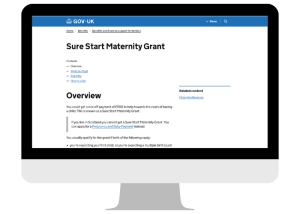
If you receive certain types of benefits, such as Universal Credit or Jobseeker’s Allowance, you may want to check if you’re eligible for the Sure Start Maternity Grant and the Healthy Start food scheme (England, Wales Northern Ireland), or the Best Start Grant/Best Start Foods scheme (Scotland). The grants offer a one-off lump sum to help pay for things like a pram, cot or clothing, and the food schemes offer a pre-paid card to help buy specific foods like milk, fruit or veg while you’re pregnant and continuing through the first few years of your child’s life.
-
Your employer might already have you covered
Before you spend time worrying about what you don’t have covered, it’s worth finding out what you might already have. Many employers offer benefits like enhanced parental leave, wellbeing support, or even life cover as part of your package, but they’re often buried in a staff handbook or HR portal that’s easy to forget about when it’s not relevant to you at the time. Take the time to check and you might find support you didn’t know was waiting for you.
It’s worth knowing that entitlements can look very different depending on your role in the pregnancy and your own workplace. Mothers and birth parents are typically entitled to a more substantial leave package, while fathers, co-parents, and partners may find their workplace offer is less substantial. Checking what each of you is entitled to early on can help you plan as a household, whatever your family setup looks like.
You could share this maternity, adoption and paternity calculator from GOV.UK with your employer which offers a breakdown per month of what you can expect to be your gross income.
-
Try building a buffer, even if small
Once you’ve completed step 1 and looked at your essential costs, you may have a clearer idea on some areas of flexibility in your finances in the run up to your new arrival.
If you can, try to set a little aside each month during pregnancy. There’s no magic number. Even a modest cushion can take the pressure off in those early weeks when the unexpected happens, and with a newborn, it usually does. Every little bit helps.
-
Think about what would happen if things changed unexpectedly
Starting a family is a natural time to ask: what would happen to the people I love if I couldn’t work, or wasn’t around? It’s not a comfortable question, but it’s an important one. Whether it’s setting up your Will or taking out life insurance, there are products designed to help with this, but the right answer looks different for everyone. A good first step is speaking to an independent financial adviser who can look at your whole picture.
Final thoughts: The cost of not knowing
The cost of not knowing about money can be higher than it looks — and when you’re starting or growing a family, the stakes feel higher than ever. From missing out on benefits you’re entitled to, to not realising your employer already has support in place, gaps in financial knowledge can quietly cost us more than we realise. None of these suggestions require you to have everything figured out. They’re simply a starting point — because knowing where to look is often the most valuable step of all.
These tips are for information and education only. They are not financial advice. For guidance tailored to your own situation, please speak to a qualified financial adviser. Find out more at moneyhelper.org.uk.

The Cost of Not Knowing
Every day, people across the UK make financial decisions that shape their lives. But too often, those choices are harder than they should be. When people aren’t taught how the system works, the cost can be high. Our new research shows the average person loses over £640 every year to confusion and indecision. We want to address this challenge at a systemic level.